What is a bomber jacket? At its core, it’s a short, waist-length jacket built around a snug ribbed collar, cuffs, and hem, with a full front zip and a slightly boxy cut through the chest and shoulders. Type “jacket bomber jacket” into Google and you’ll find thousands of listings, but very few actually explain where the design comes from, why it looks the way it does, or why it’s stuck around for nearly a century. This guide answers properly the definition, the history, the materials, and everything else that makes a bomber jacket a bomber jacket rather than just another zip-up coat.
What Is a Bomber Jacket, Exactly?
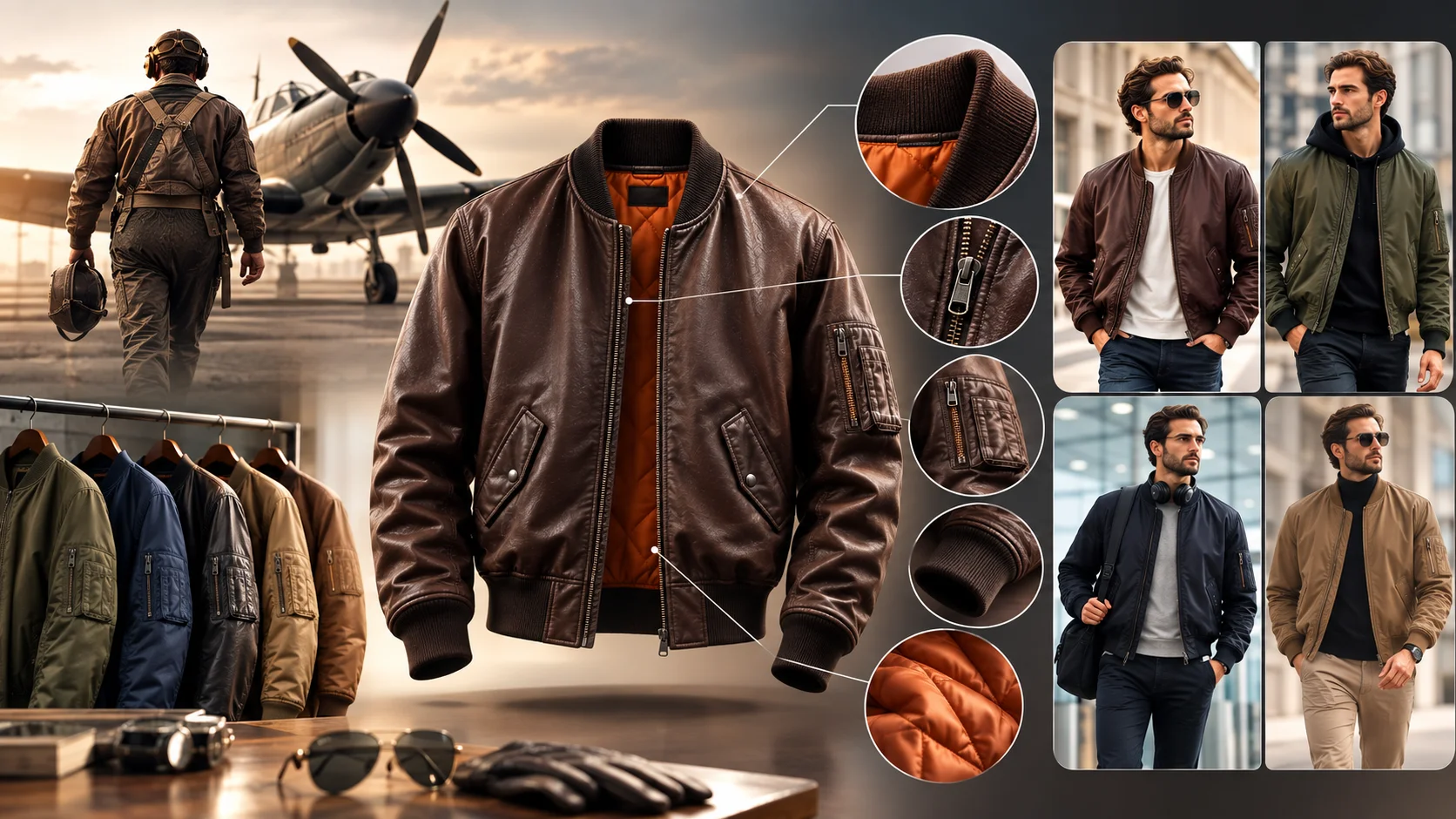
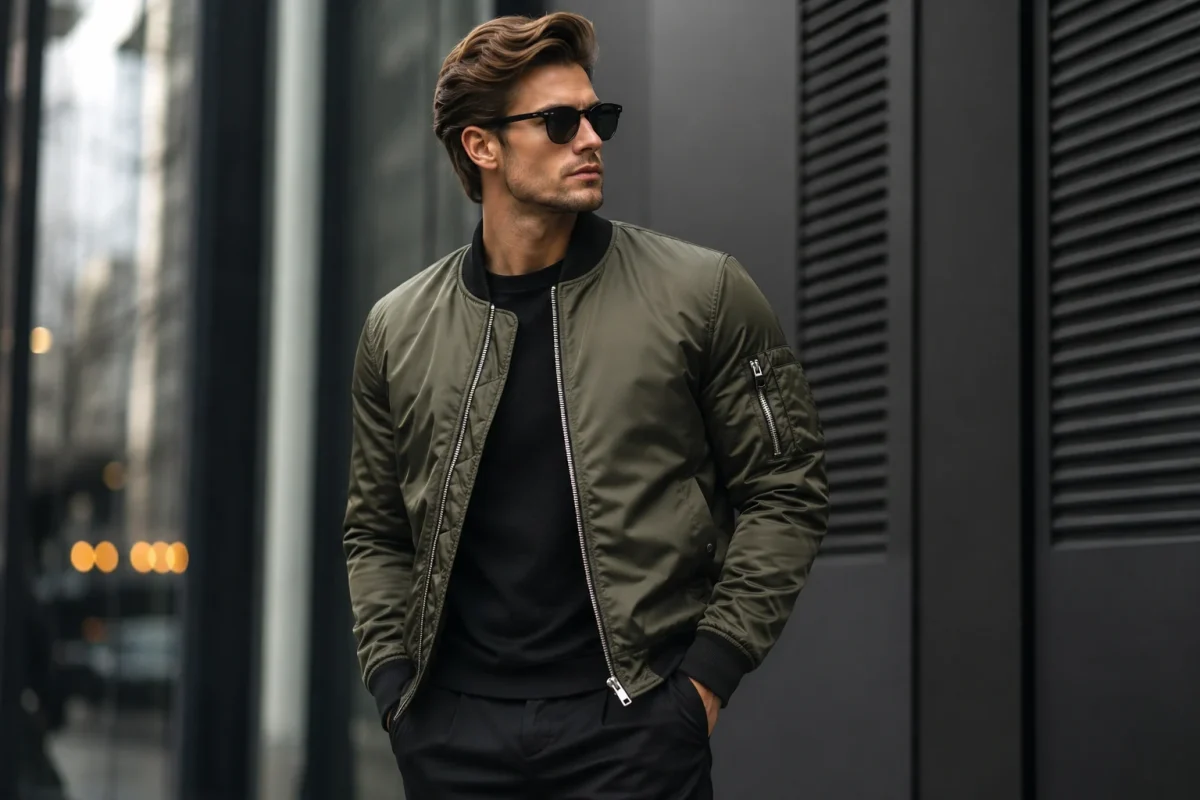
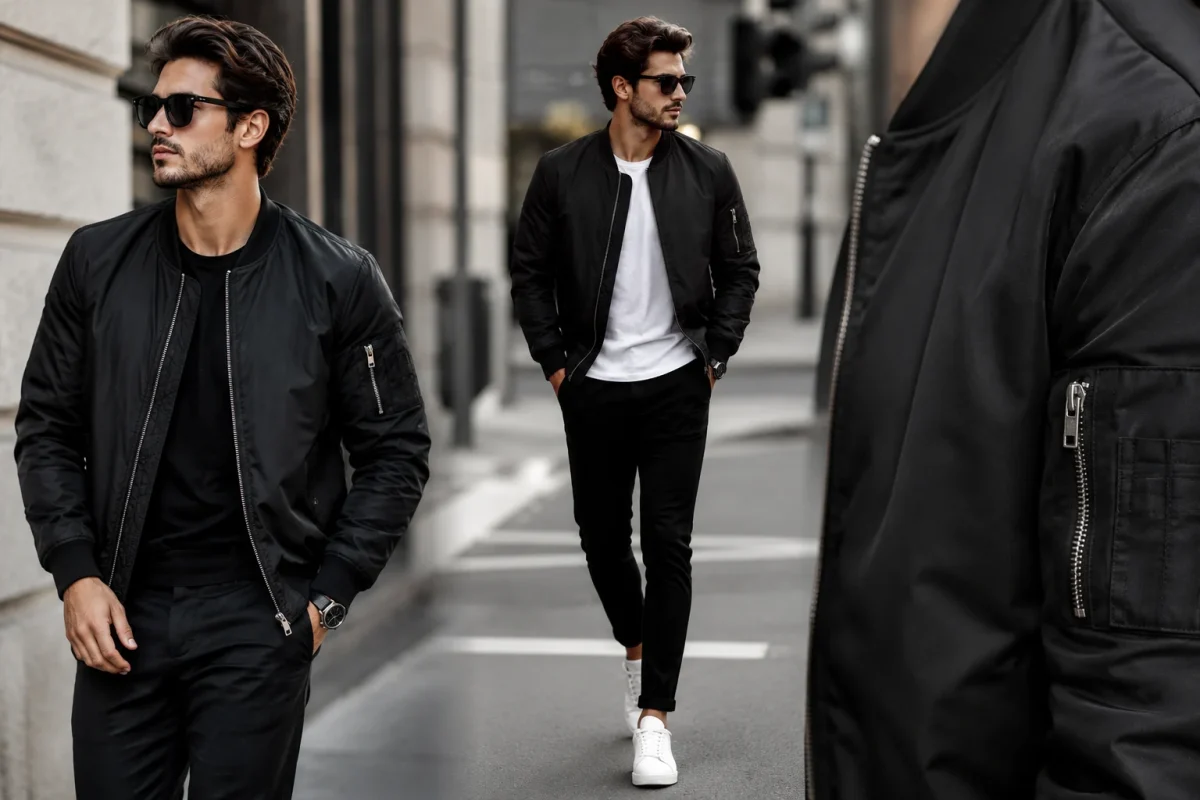
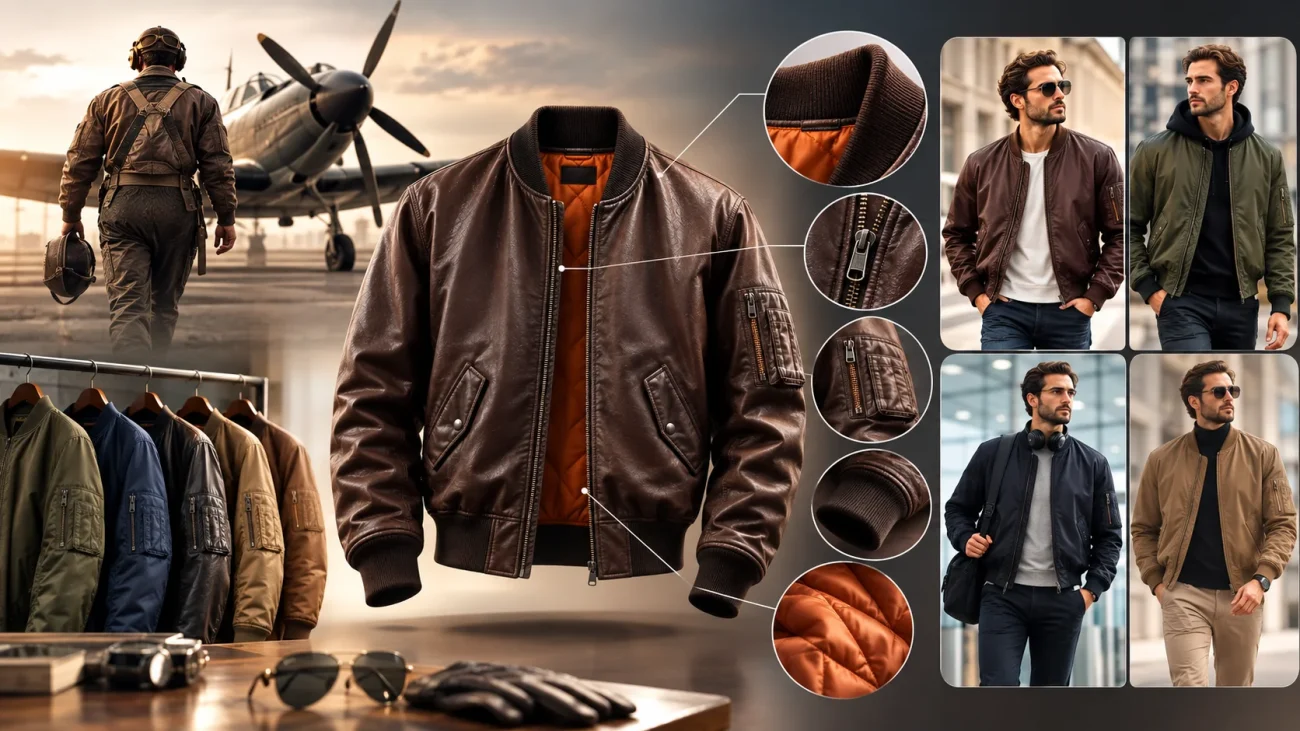
A bomber jacket is a category of outerwear defined by four things working together: a cropped, waist-length body, ribbed knit trim at the collar, cuffs, and hem, a front zipper closure, and a rounded collar with no lapels. That ribbed trim isn’t decorative it’s the entire mechanism of the design. It cinches the jacket in at the waist and wrists, which is exactly why a bomber sits close to the body instead of hanging loose the way a topcoat or overcoat does.
The name covers a genuinely wide range of jackets today, from butter-soft leather to technical nylon, but every version traces back to one original purpose: keeping military pilots warm at high altitude. That single functional requirement is why the silhouette has barely changed in almost a hundred years. It was solved correctly the first time.
What Does a Bomber Jacket Look Like?
Picture a jacket that stops right at the hip, with a rounded or stand-up collar, no lapels, and a clean, unstructured front. There’s usually a slanted or flap chest pocket on each side, sometimes a smaller zip pocket on the sleeve, and nothing tailored or stiff about the shoulders. The overall shape reads as slightly boxy through the body but fitted at the openings loose enough to move in, snug enough to keep wind out.
The Defining Features of a Bomber Jacket
- A cropped length that ends at or just below the waist, never past the hip
- Ribbed knit panels at the collar, cuffs, and waistband
- A full-length front zipper, occasionally hidden behind a storm flap
- A rounded or banded collar, with no lapels at all
- A slightly boxy, unstructured cut through the chest and shoulders
If a jacket has lapels, buttons instead of a zip, or a hem that falls past the hips, it isn’t technically a bomber, it’s a different garment borrowing the name.
Find Your Perfect Bomber Jacket
Explore leather, nylon, and classic bomber styles designed for everyday wear.
Shop Men’s Bomber Jackets
Why Is It Called a Bomber Jacket?
The name has nothing to do with the jacket’s look and everything to do with who wore it. During World War II, heavy bomber aircraft flew at high altitude in unpressurized, poorly insulated cabins, so crews needed something warmer and more durable than a standard flight jacket. The fur-lined, sheepskin B-3 issued specifically to those bomber crews is widely credited as the piece most responsible for the term “bomber jacket” entering everyday language, while the leather A-2 became the design most people actually picture when they hear the phrase. Fighter pilots wore A-2s too, but the association with bomber crews is what stuck, and the name simply carried over once the jackets moved into civilian wardrobes after the war.
Bomber Jacket History: When Was the Jacket Invented?
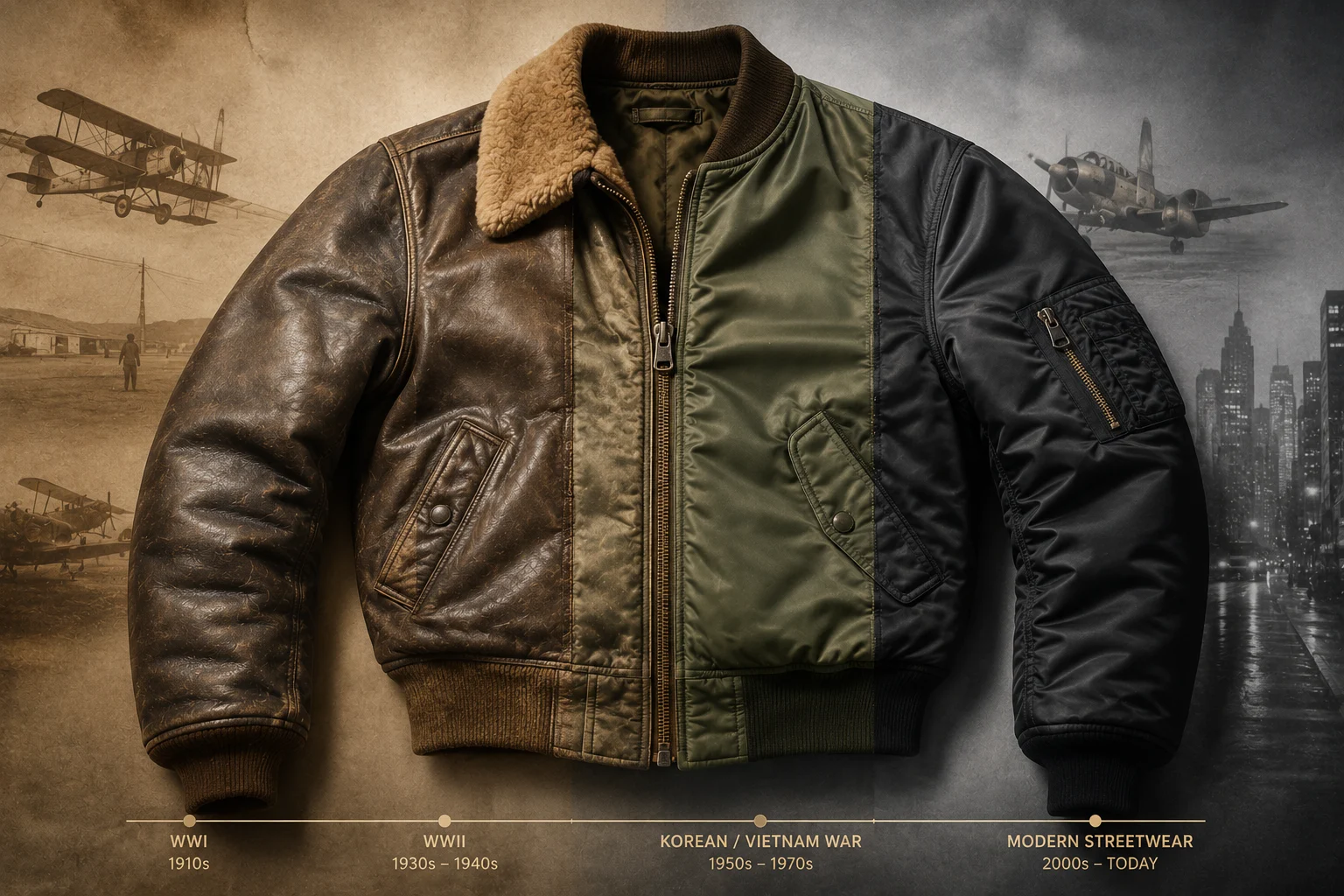
The bomber jacket’s story starts earlier than most people assume not in World War II, but in World War I, when pilots first needed real protection from open-cockpit flying.
World War I: The Flight Jacket Origins
Early aircraft had no enclosed cabins, so pilots flew exposed to freezing wind at altitude. In 1927 the U.S. Army standardized its first flight jacket, the Type A-1, built from horsehide or goatskin with a knitted waistband and cuffs for insulation the earliest blueprint for the ribbed-trim shape every bomber jacket still uses today.
World War II: The A-2 and B-3
By the early 1930s the button-front A-1 had been replaced by the zip-front A-2, officially adopted in 1931 and worn widely by U.S. Army Air Corps pilots and bombardiers through World War II. For crews flying at the coldest, highest altitudes, the shearling-lined B-3 offered even more protection, with a wide fur collar that could be fastened shut. Britain’s Royal Air Force issued its own version, the Irvin sheepskin jacket, designed by parachute maker Leslie Irvin for the same brutal cold at altitude.
The Jet Age: The MA-1
When jet aircraft replaced propeller planes in the 1950s, heavy leather became a liability; it soaked up moisture on the ground and froze solid at altitude. The nylon MA-1 replaced it, built for a wider temperature range and known for its reversible orange lining, added so a downed pilot could be spotted easily against snow or open ground.
From Military Surplus to Street Style
Once the jackets stopped being essential flight gear, they didn’t disappear they moved into general circulation as durable, affordable surplus. Hollywood accelerated the shift: Marlon Brando and James Dean wore leather bombers on screen in the 1950s, and by the 1970s and 1980s the MA-1 had been adopted by entirely different scenes, from British subcultures to early hip-hop style in New York. That’s the real reason the bomber jacket ended up as a wardrobe staple rather than a forgotten piece of surplus; it kept getting rediscovered by people who had nothing to do with aviation.
What Are Bomber Jackets Made Of?
Bomber jacket material has expanded a lot since the 1920s, but it still splits into two broad camps: natural hide, which is where the category started, and technical or synthetic fabrics, which took over once function moved beyond military aviation.
Traditional Bomber Jacket Materials
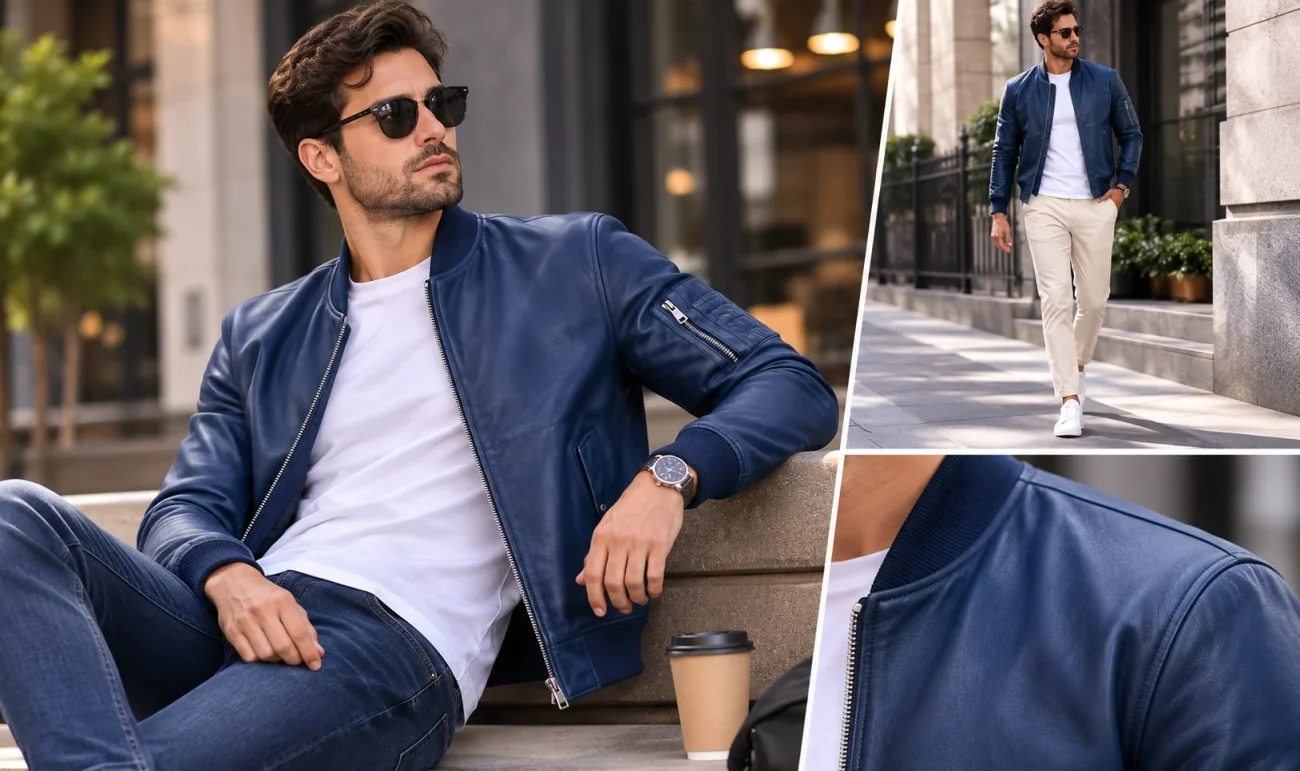
Leather is the material the entire category is named after, and it’s still considered the traditional bomber jacket choice. The earliest military pieces were cut from horsehide or goatskin for durability, while lambskin became popular later for its softness and lighter feel you’ll see this variety reflected in something like a black lambskin leather bomber jacket, where the hide is chosen specifically for how it breaks in over time. Genuine leather is graded as full-grain or top-grain, and it’s the one bomber jacket material that actually improves with age it softens, develops a patina, and molds to the wearer rather than wearing out.
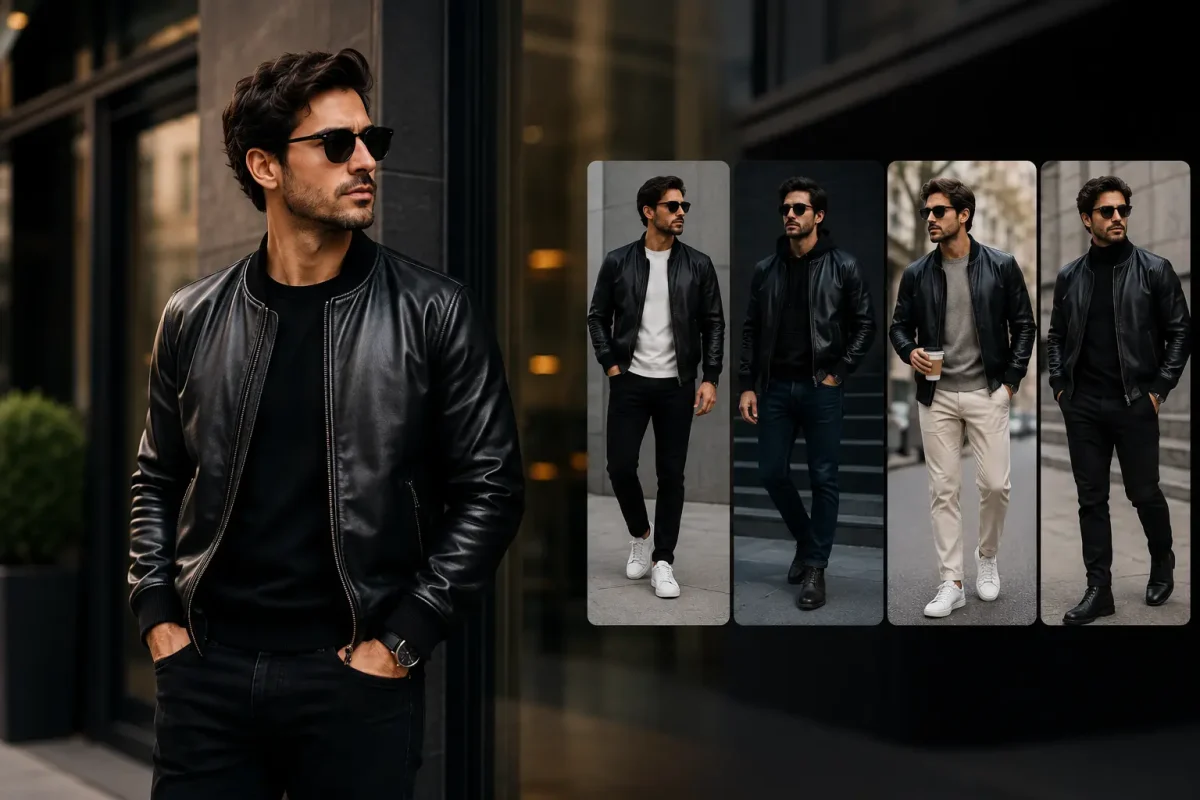
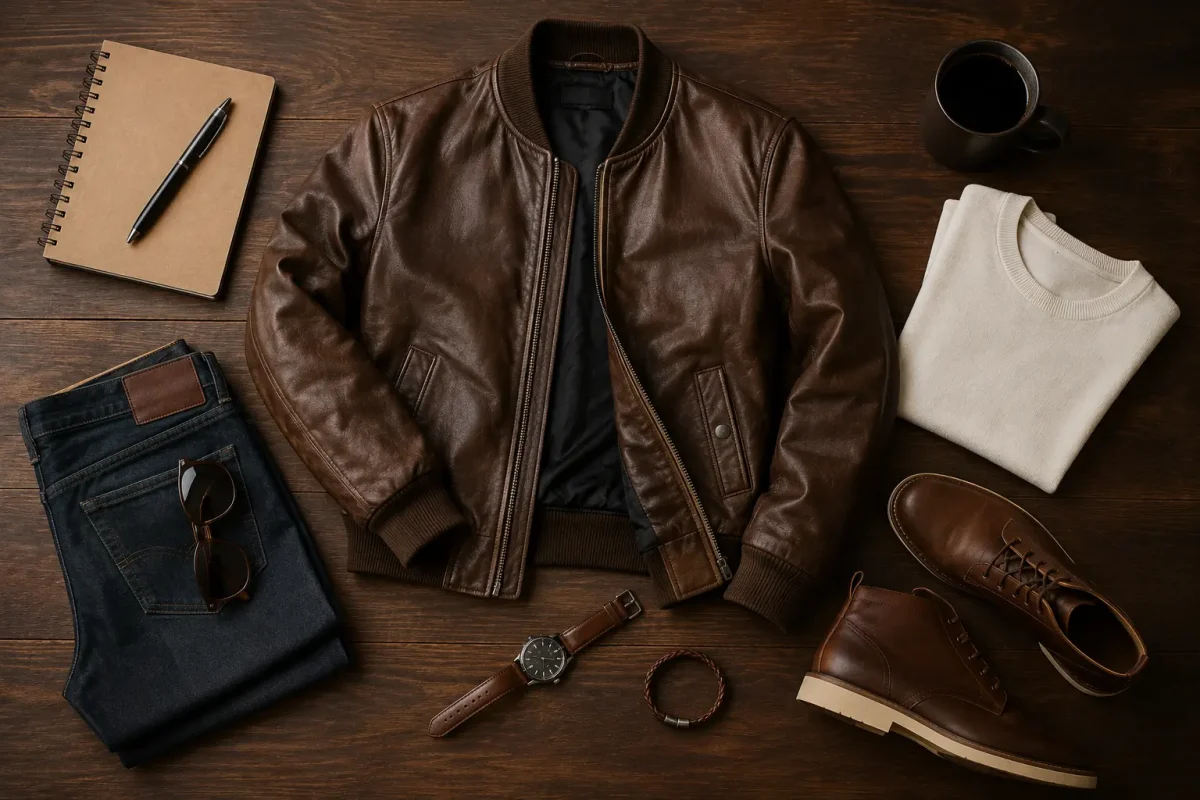
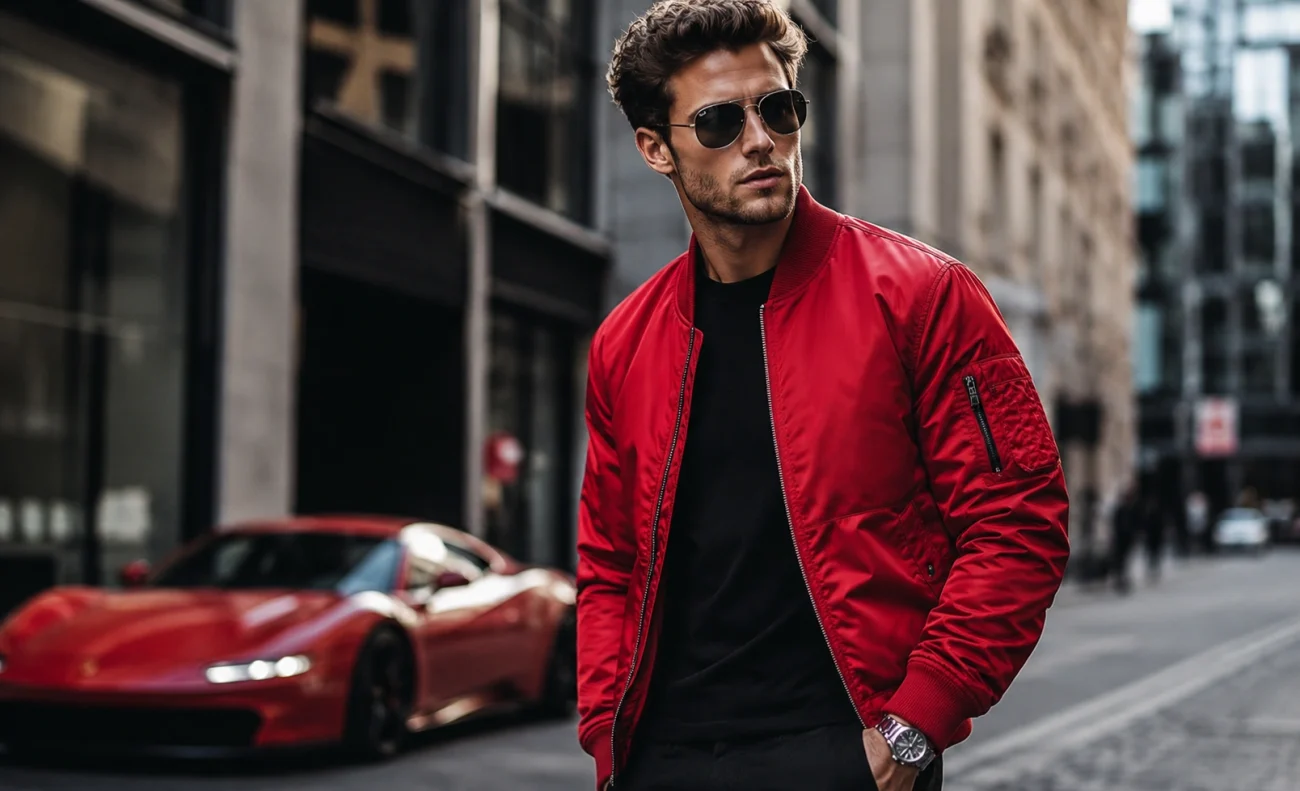
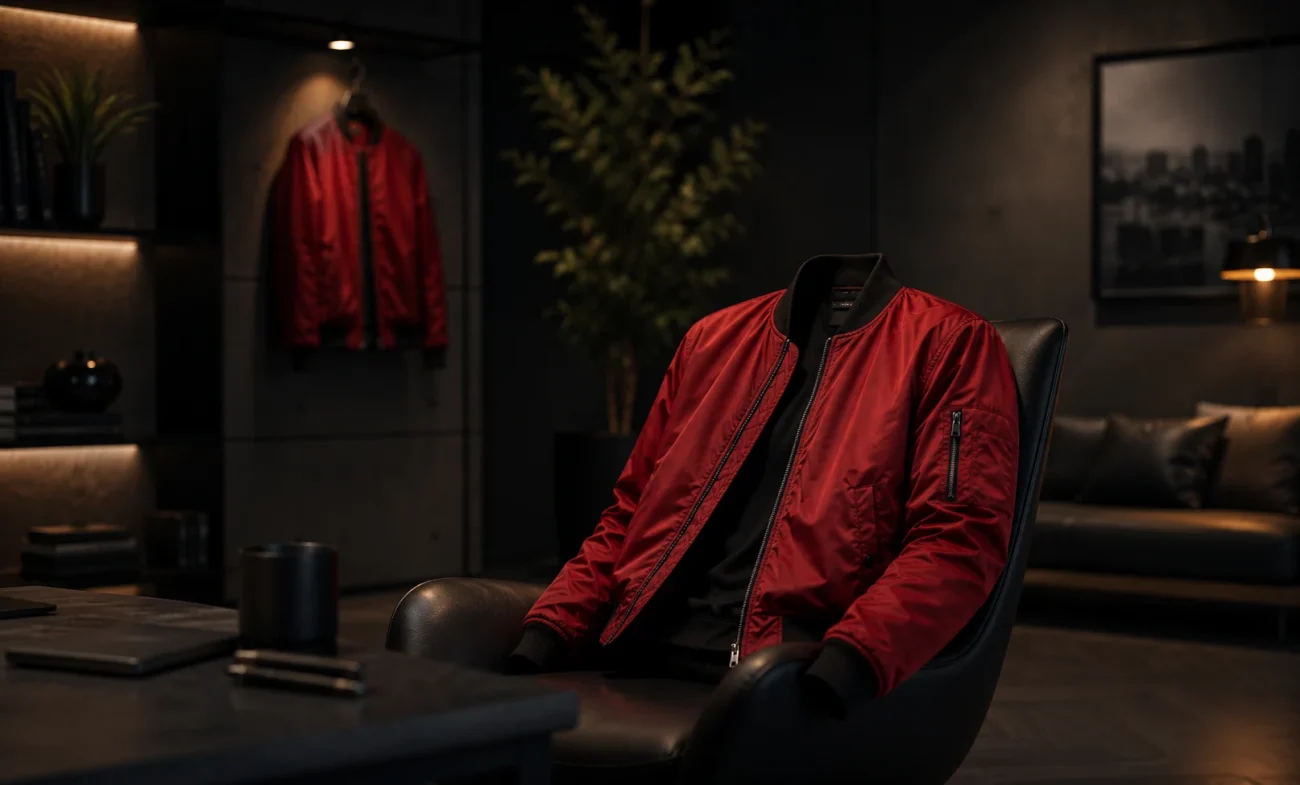
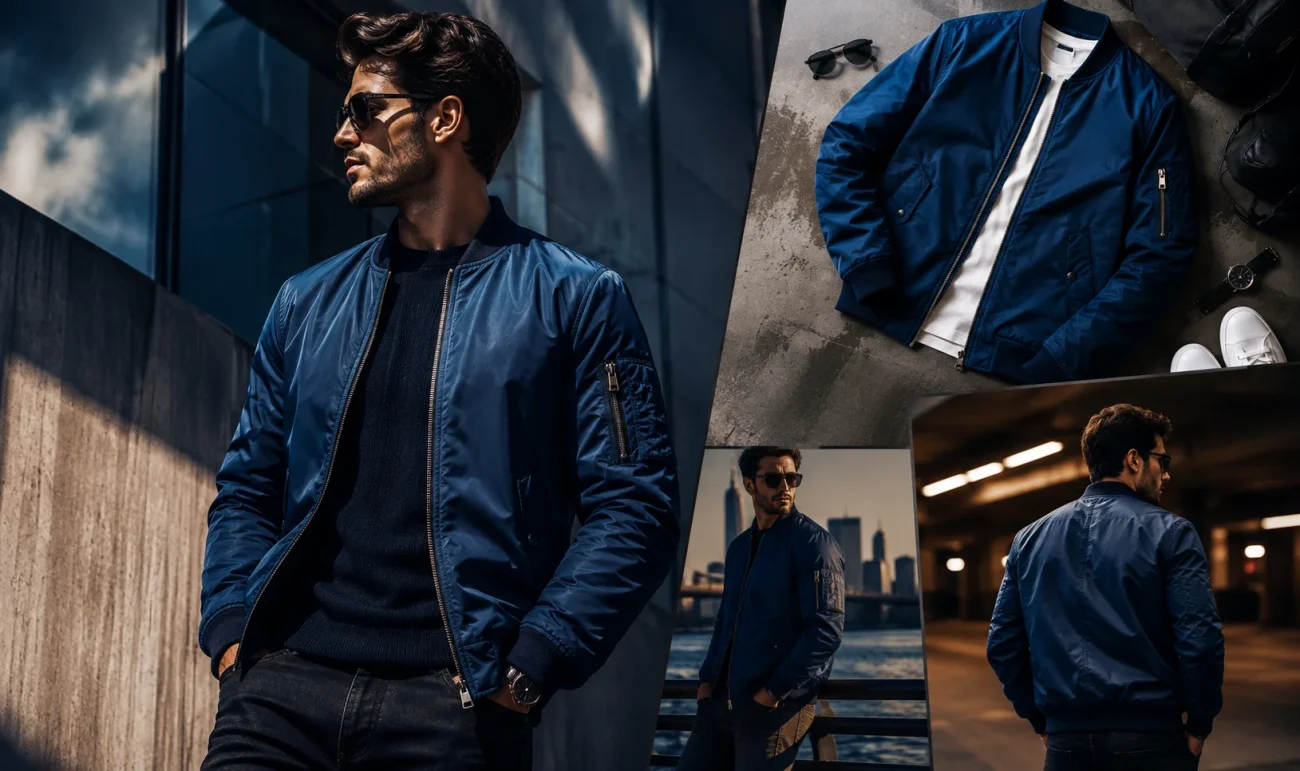
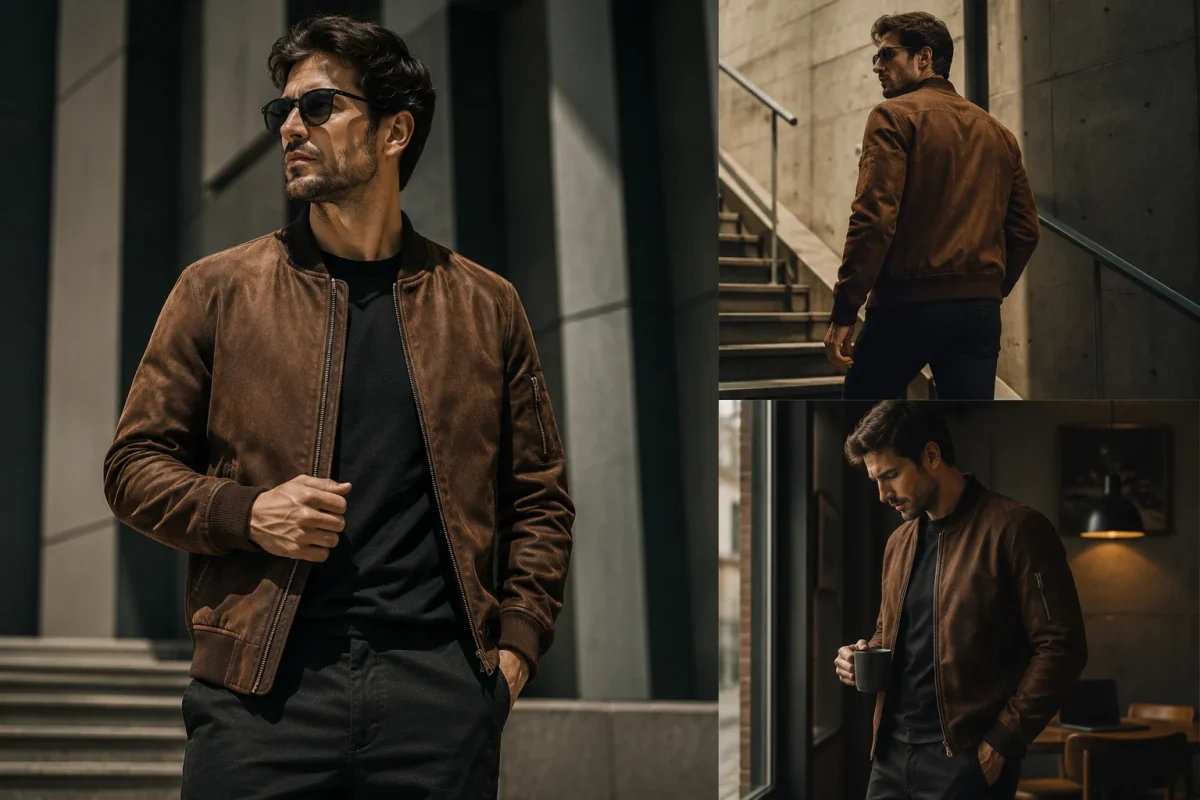
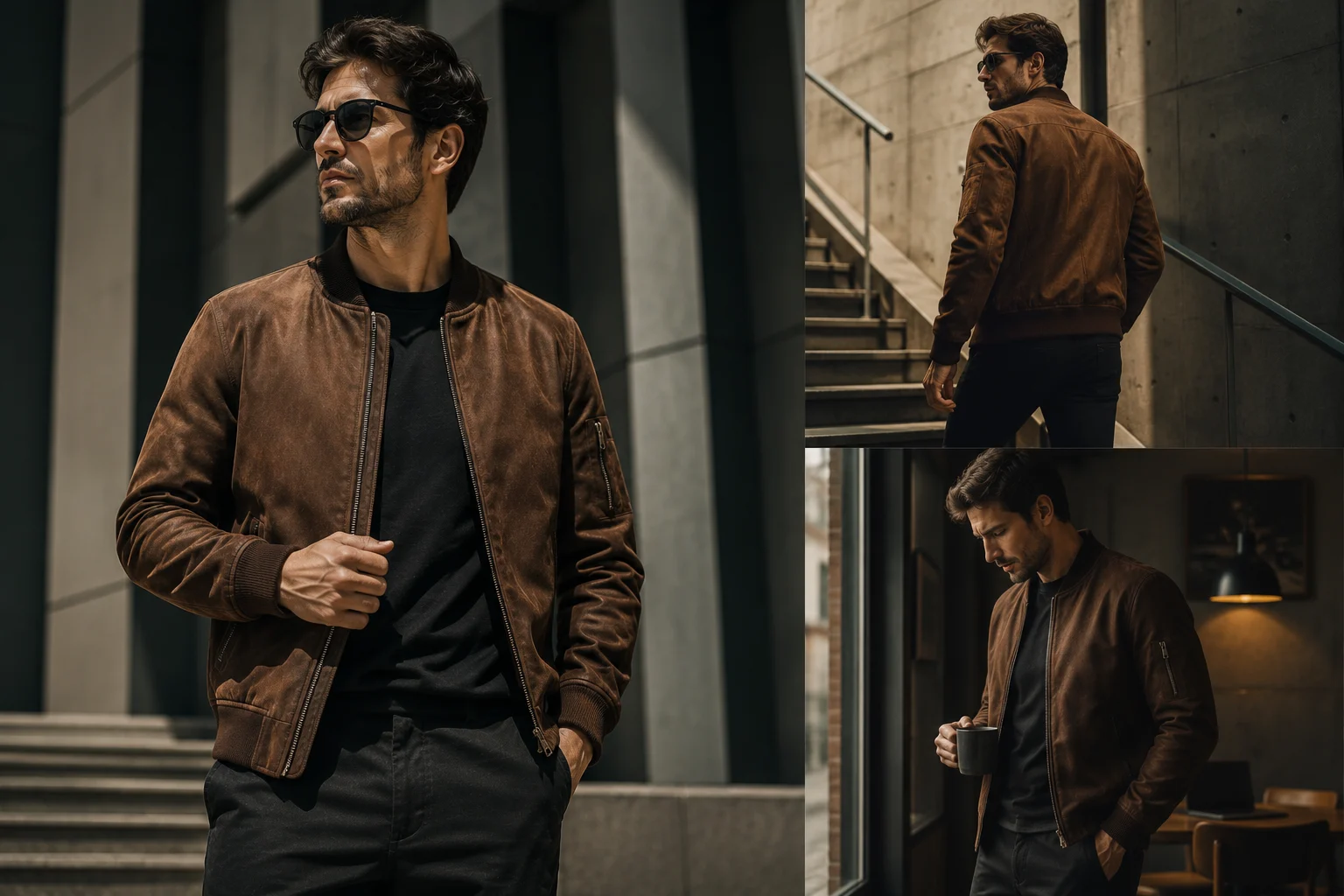
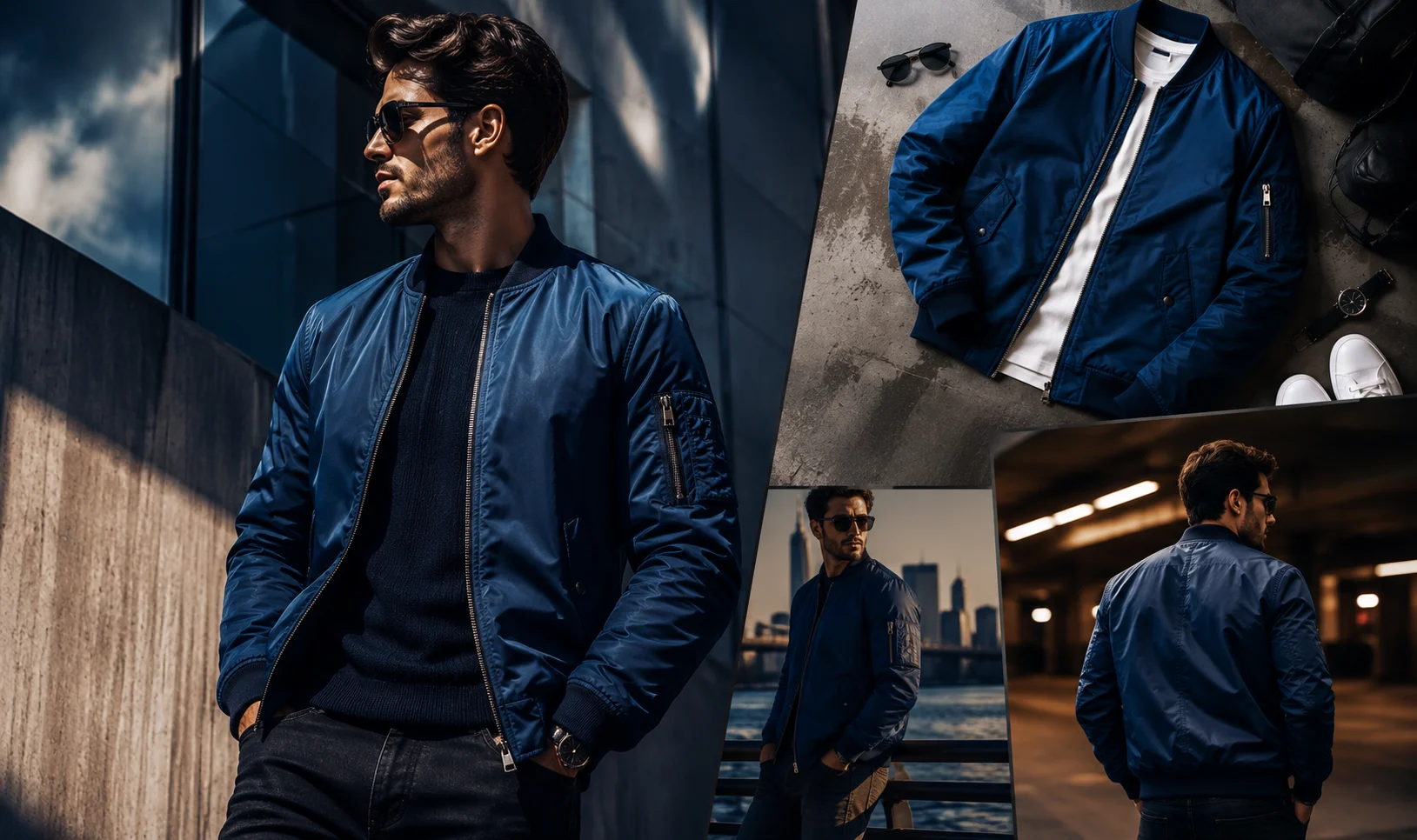
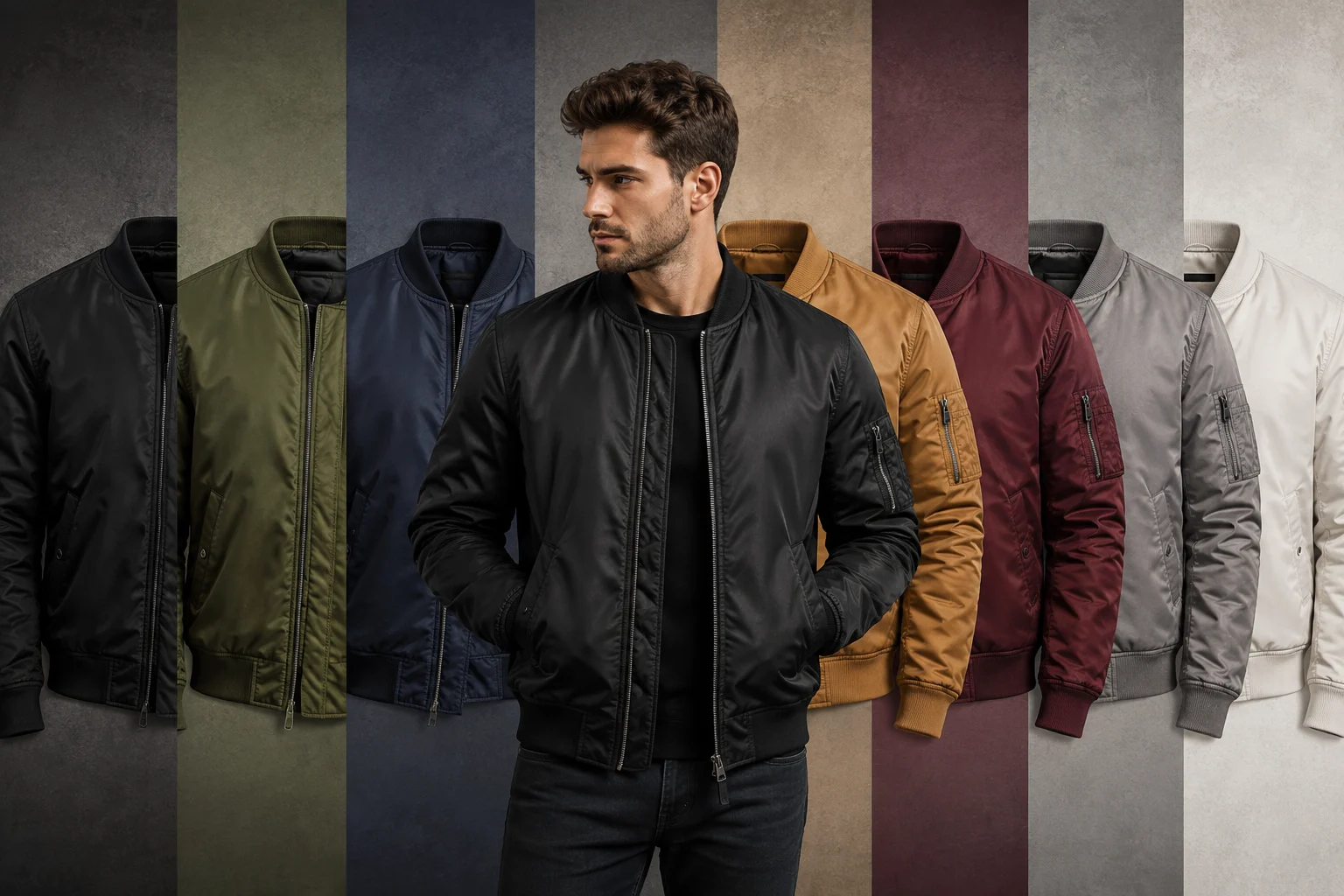
Color changes how the leather reads without changing the construction. A black bomber jacket is the most versatile option for everyday wear, a brown bomber jacket tends to show more visible grain and character as it ages, while a red bomber jacket or a blue bomber jacket pushes the same silhouette toward something bolder, for anyone who wants the jacket to stand out rather than blend into a rotation of neutrals.
Modern Bomber Jacket Fabrics
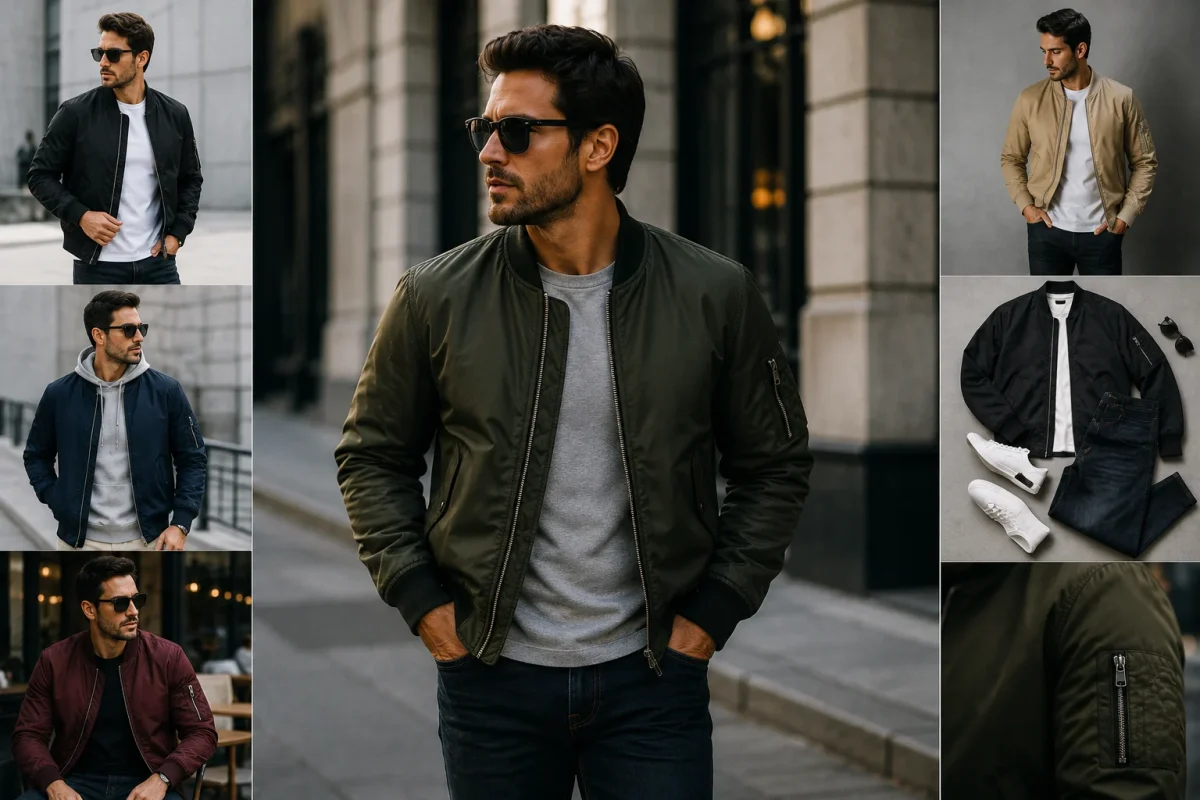
Nylon became the standard once jet-age flight demanded something lighter and more weather-resistant than leather, and it’s still the go-to for anyone who wants the bomber shape without the weight or upkeep of hide. Cotton twill offers a softer, more casual middle ground, while quilted or shearling-lined builds add real insulation for genuinely cold weather without changing the jacket’s outline.
For the coldest months, a fur-lined leather bomber jacket combines that original B-3 idea: a fur or shearling collar for extra warmth with a modern leather shell, giving you the historical detail without the bulk of the original military piece.
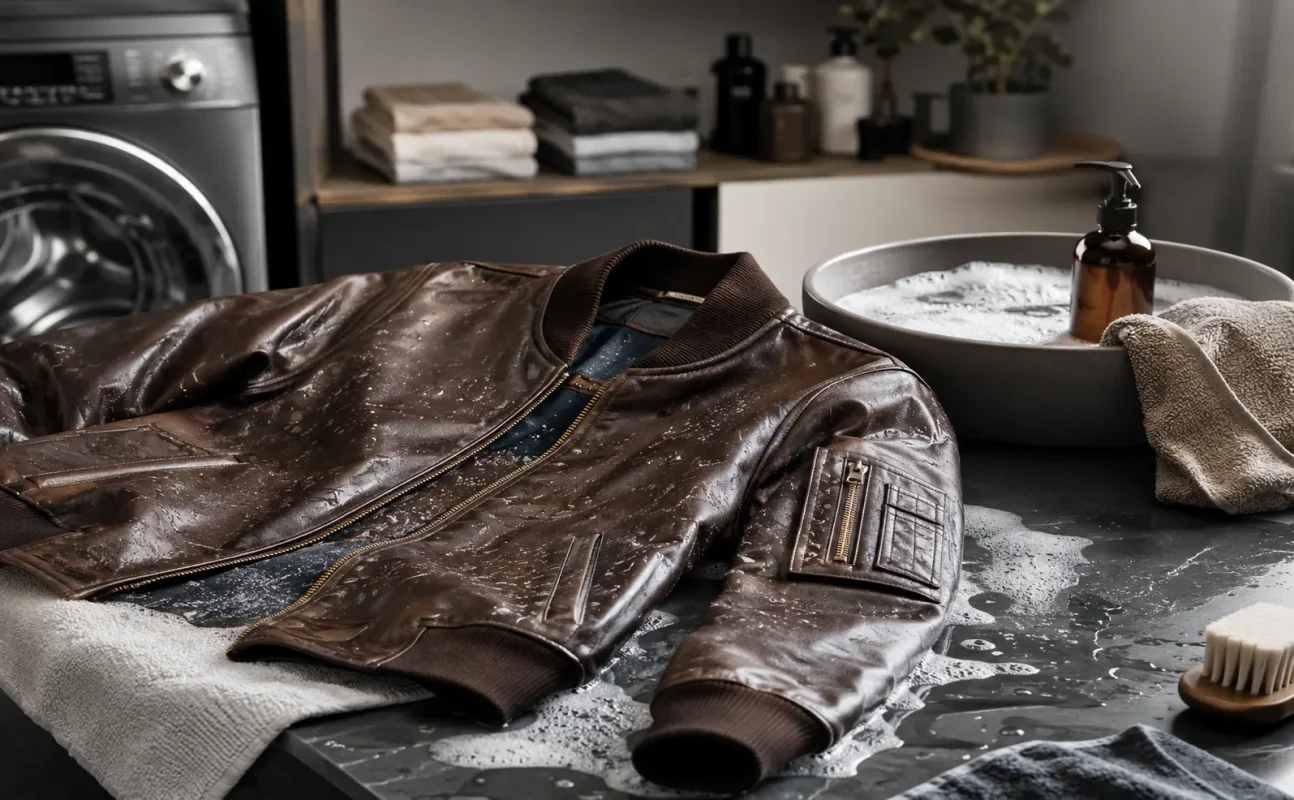
Because leather is a natural material, it needs a bit more attention than nylon or cotton. If you already own one, our guide on how to wash a bomber jacket covers exactly how to clean each material without damaging the ribbed trim or the hide itself.
Ready to Make the Bomber Jacket Yours?
From classic leather to modern statement colors, find a bomber that fits your personal style.
Explore Bomber Jackets
What Makes a Bomber Jacket Different From a Regular Jacket?
The confusion usually comes down to three lookalikes: flight jackets, varsity jackets, and biker or motorcycle jackets. A flight jacket is really the umbrella term the bomber grew out of in practice, most people use the two names interchangeably today, though “flight jacket” technically covers pilot gear more broadly, not just the bomber shape. A varsity jacket shares the ribbed collar, cuffs, and waistband, but it’s built from wool body panels with leather sleeves and snap buttons rather than a full zip, and it comes from American collegiate sports, not military aviation, a completely different origin story that happens to land on a similar silhouette.
A biker or motorcycle jacket is closer in spirit but still distinct: it’s typically longer, more structured, and built with asymmetric zips and heavier hardware rather than ribbed trim. If you want that harder-edged look without losing the bomber’s fitted, ribbed shape, a motorcycle bomber jacket blends both the bomber’s cropped, close-fitting body with a biker jacket’s harder detailing.
What makes a bomber jacket a bomber jacket, in short, is the ribbed trim doing structural work at the collar, cuffs, and waist not the collar shape, not the closure alone, but that specific combination together.
What Is a Bomber Jacket in Fashion Today?
In fashion terms, the bomber jacket isn’t a trend that comes and goes; it’s treated as a permanent wardrobe basic, the same category as a denim jacket or a plain white sneaker. Designers reinterpret it constantly, whether that means a cropped, high-waisted cut, an oversized streetwear fit, or an elevated version in suede or technical fabric, but the underlying shape stays recognizable no matter how it’s styled. If you’re curious whether it still holds up as a genuine style choice rather than a dated military relic, this breakdown of whether bomber jackets are still fashionable goes into that question directly.
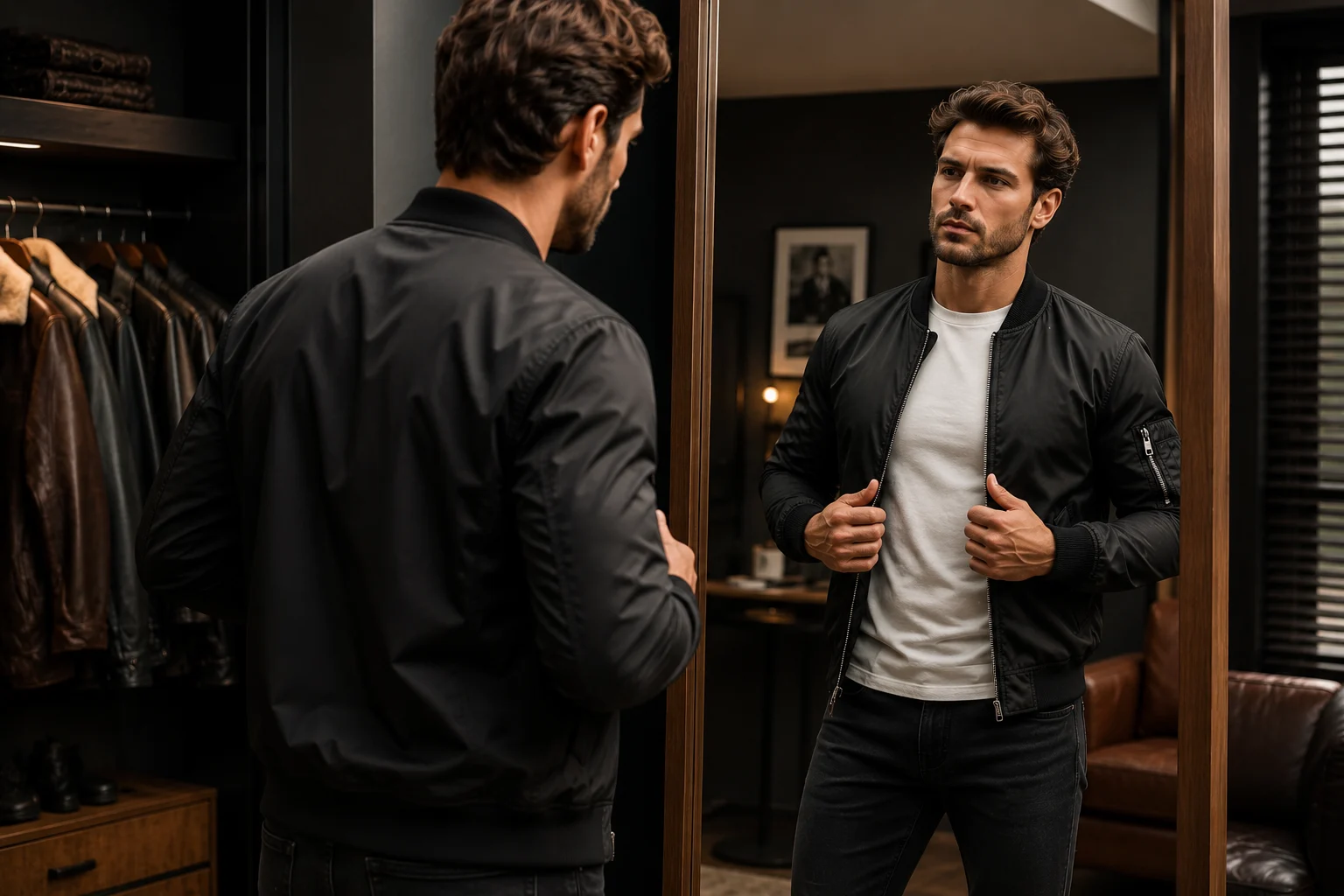
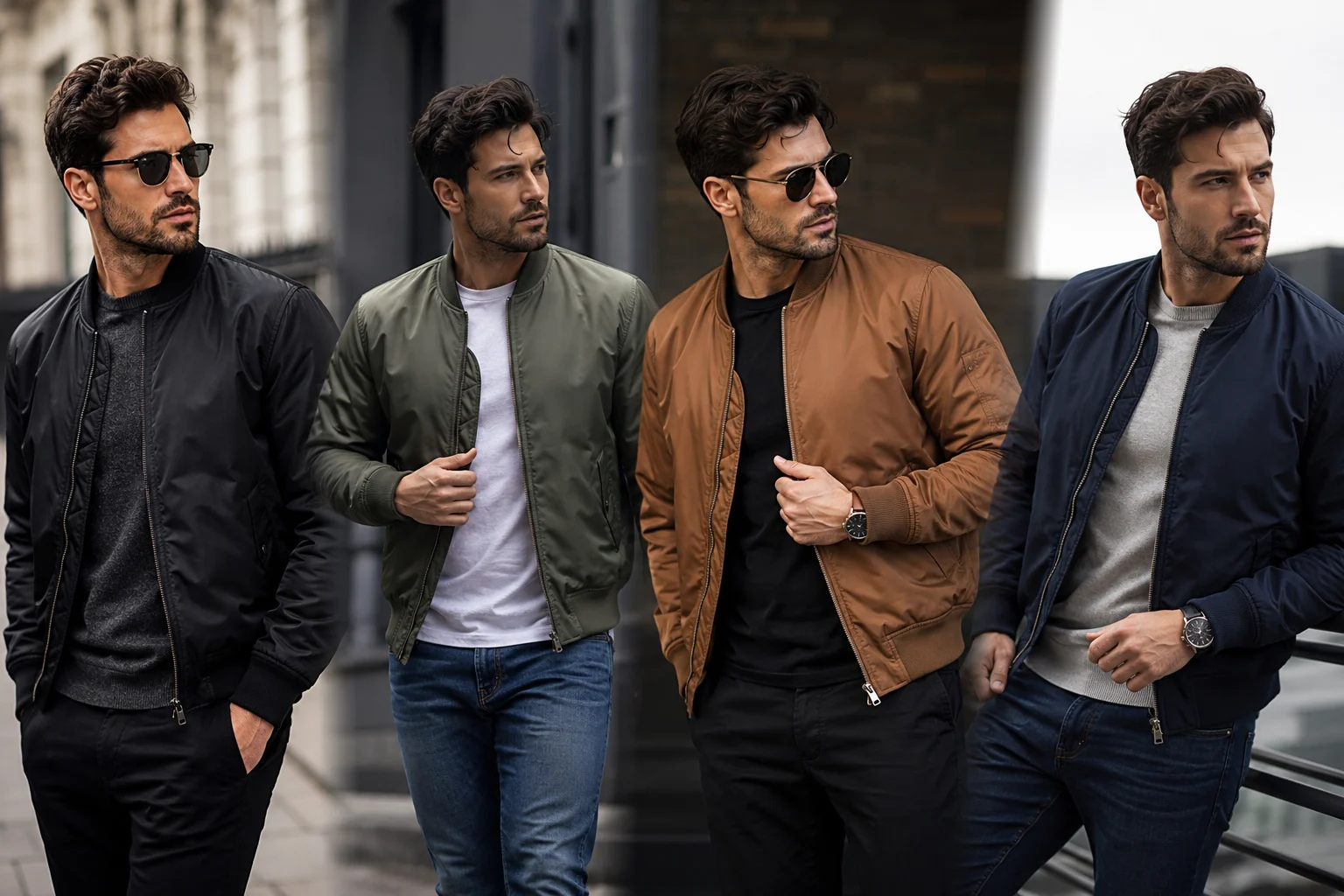
Its versatility is really the reason it never got retired: a bomber layers over a hoodie for streetwear, sits under a button-down for smart-casual, or pairs with almost anything in between. That range is exactly what we’ve built our men’s bomber jacket collection around leather, nylon, and quilted options that all keep the same close-cut, ribbed-trim shape the style has always been known for. If you want a sense of how to actually put one together, our guide to styling a bomber jacket walks through outfit combinations for different occasions.
When Were Bomber Jackets Popular? A Timeline
Bomber jackets have gone through several distinct waves of popularity rather than one continuous run, and understanding the timeline explains why the style still feels current.
- 1917–1918 (WWI): Flight jackets appear as functional pilot gear, not yet a fashion item.
- 1927–1945 (WWII era): The A-1, A-2, and B-3 become standard military issue and enter public consciousness through newsreels and returning veterans.
- 1950s: Hollywood adopts the leather bomber as a symbol of rebellious cool, and the nylon MA-1 is developed for jet-age pilots.
- 1970s–1980s: The MA-1 crosses into youth subcultures across the UK and US and becomes a streetwear and music-scene staple.
- 1990s–2000s: Hip-hop and skate culture keep the silhouette in steady rotation, often in bold colors and oversized fits.
- 2010s–today: High fashion and streetwear both embrace the bomber simultaneously, cementing it as a menswear basic rather than a passing trend.
That repeated resurgence in the military, Hollywood, subculture, and high fashion is unusual for any garment. Most military-derived clothing fades into costume-party territory. The bomber kept getting reinvented instead.
Upgrade Your Jacket Collection With Genuine Leather
Explore premium leather bomber jackets built around the classic silhouette that has defined this iconic style for generations.
Shop Leather Bomber Jackets
Frequently Asked Questions About Bomber Jackets
What is a bomber jacket?
A bomber jacket is a short, waist-length jacket with a fitted body, ribbed knit trim at the collar, cuffs, and waistband, and a full front zip closure. It was originally designed for military pilots in the early 20th century and later became a mainstream fashion staple worn well beyond its aviation roots.
What does a bomber jacket look like?
It has a rounded or stand-up collar with no lapels, a boxy but fitted silhouette that ends right at the waist, slanted or flap chest pockets, and elasticized ribbing at the cuffs and hem that pulls the jacket close to the body rather than letting it hang loose.
Why is it called a bomber jacket?
It’s named after the crews who wore it, specifically the bomber aircraft crews of World War II, who needed a warmer, more durable jacket than standard flight gear for high-altitude missions. The sheepskin B-3, issued to those crews, is most often credited with the name entering common use.
What are bomber jackets made of?
Traditional bomber jackets are made of genuine leather, including lambskin, goatskin, and cowhide. Modern versions also use suede, nylon, cotton twill, and quilted or shearling-lined fabrics, with leather remaining the most traditional and long-lasting option.
When were bomber jackets popular?
Bomber jackets first became widespread during World War II as a military issue, then resurged in the 1950s through Hollywood, again in the 1970s–1980s through youth subcultures, and have remained a consistent menswear staple from the 1990s through today.
What’s the difference between a flight jacket and a bomber jacket?
“Flight jacket” is the broader umbrella term for any jacket designed for pilots, while “bomber jacket” specifically refers to the cropped, ribbed-trim style that became associated with bomber aircraft crews. In everyday use, the two terms are now largely interchangeable.
Is a bomber jacket the same as a varsity jacket?
No. Both share ribbed trim at the collar, cuffs, and waist, but a varsity jacket typically has wool body panels, leather sleeves, and snap buttons, and comes from American collegiate sports rather than military aviation.
What is a traditional bomber jacket made from?
A traditional bomber jacket is made from genuine leather originally horsehide or goatskin, later lambskin and cowhide built with a ribbed collar, cuffs, and waistband and a front zip closure, staying as close as possible to the original military design.
Final Thoughts
So, what is a bomber jacket, at the end of it all? It’s a piece of military history that never went out of service: a cropped, ribbed-trim, zip-front jacket built for pilots and adopted by everyone else because the design simply works.
From horsehide flight jackets in the trenches of World War I to the leather and nylon pieces in wardrobes today, the shape has barely changed because it never really needed to. Leather Outfit Store builds its bomber jacket collection around that same original blueprint genuine hide, real ribbed knit trim, and fits sized the way a bomber was always meant to be worn: close at the collar and cuffs, structured through the body, and built to last.



2 thoughts on “What Is a Bomber Jacket? Meaning, History and Design Explained”