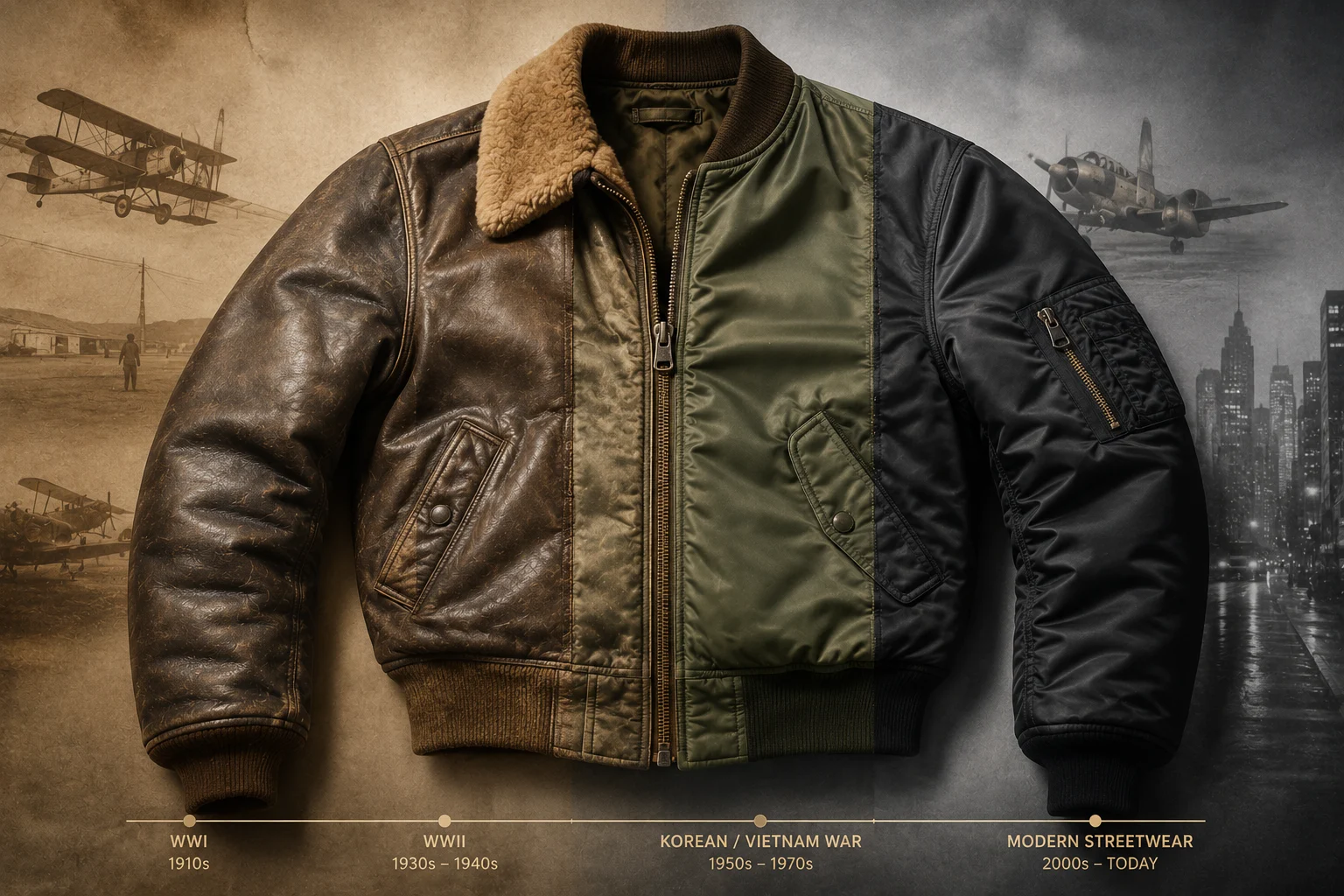
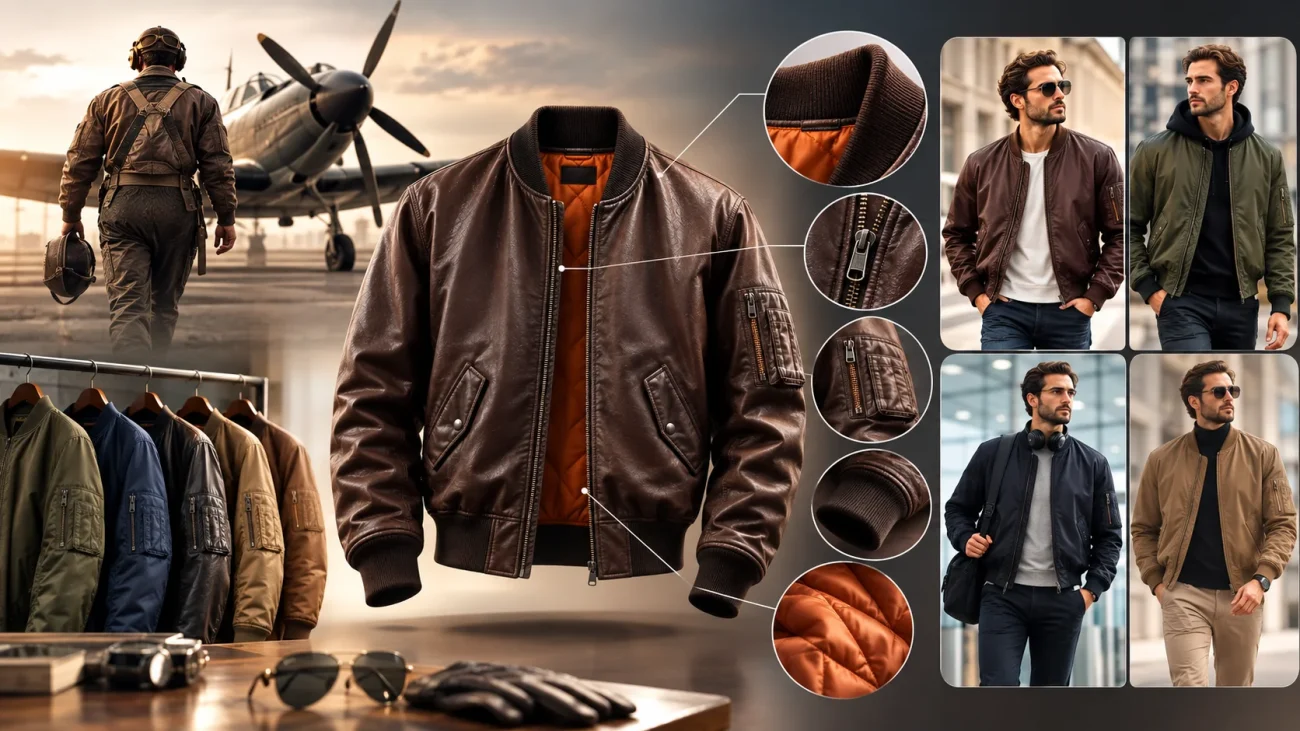
The bomber jacket history stretches back more than a century, to a time when pilots needed something between a coat and a piece of survival gear. What began as functional flight equipment for open-cockpit planes has become one of the most recognizable jackets in modern menswear, worn on runways, film sets, and city sidewalks alike. Understanding where the bomber came from, and why it never really went away, makes it easier to see why the silhouette still holds up today, whether you’re wearing a nylon reissue or a full-grain leather bomber jacket built for everyday life.
This is a deep, chronological look at that story, model by model and decade by decade: the WWI-era flight clothing that started it all, the exact military specifications that shaped the A-1, A-2, G-1, and MA-1, the 1950s bomber jacket’s move into Hollywood, its unexpected detour through 1980s subculture, and how it eventually became the wardrobe staple it is today. Along the way, you’ll get straight answers to the questions people actually search for, including when were jackets invented and were bomber jackets popular in the 80s.
When Were Jackets Invented? A Quick Primer Before the Bomber
Jackets as a distinct garment, separate from full-length coats, started appearing in Europe as early as the 16th and 17th centuries, when tailors began cutting shorter, fitted outer layers for working men who needed more freedom of movement than a long coat allowed. By the 19th century, jackets had split into dozens of specialized forms: riding jackets, hunting jackets, pea coats for sailors, and eventually the tailored suit jacket that defined menswear for the next hundred years.
The bomber jacket belongs to a much newer, far more specific branch of that family tree. It wasn’t born out of tailoring tradition at all, it was born out of necessity, when early 20th-century aviation created a problem no existing jacket could solve: how to keep a person warm and mobile at altitude, in an aircraft with no enclosed, heated cabin.
The Birth of the Bomber Jacket: WWI Flight Clothing (1917–1918)
The story starts in 1917, when the US Army’s Aviation Clothing Board was formed to solve a very real, very cold problem. Pilots flying open-cockpit biplanes at high altitude were exposed to wind chill far below freezing, with nothing but a standard uniform between them and the elements, and a number of early aviators suffered frostbite and exposure simply doing their jobs. The Board’s early solution was heavy, close-fitting leather, sometimes lined with fur or wool, cut to trap body heat rather than let it escape.
That WWI-era clothing wasn’t yet the standardized garment people picture today, it was closer to a working prototype, produced in small batches and adjusted as pilots reported what worked at 15,000 feet and what didn’t. But it established the core idea that every later bomber jacket would build on: a snug waistband, fitted cuffs, and a warm, wind-resistant shell built specifically for the cockpit, not adapted from something else.
Bring Bomber Jacket History Into Your Wardrobe
Inspired by more than a century of flight-jacket design? Explore our men’s leather bomber jackets for timeless style, quality materials, and the iconic silhouette that started it all.
Explore Men’s Leather Bomber Jackets
From Prototype to Standard Issue: The A-1 and A-2 Jackets (1927–1931)
It took another decade for that WWI-era experimentation to become an official, standardized garment. In 1927, the US Army Air Corps issued the Type A-1 as standard-issue flight clothing: a button-front jacket in chrome-tanned sheepskin, with a knitted collar, cuffs, and waistband, designed to replace the bulky sweaters pilots had been layering under their flight suits.
The A-1’s sheepskin leather didn’t hold up well in the field, so in 1931 the Air Corps replaced it with the Type A-2, built from more durable horsehide and switching the button front for a zipper, with a fold-down leather collar instead of a knitted one. The A-2 became the jacket most associated with WWII bomber crews, many of whom had squadron patches, painted nose art, and mission tallies stitched or painted directly onto the back, turning standard-issue flight gear into deeply personal artifacts.
Why Is It Called a “Bomber” Jacket?
This is one of the most commonly searched questions in the history of the bomber jacket, and the answer is less official than most people expect. The garment wasn’t originally called a bomber jacket at all, military documentation referred to it as a flight jacket, and each individual model carried its own alphanumeric designation like A-2, G-1, or MA-1.
“Bomber jacket” is a nickname that stuck because of exactly who wore the A-2 most visibly during World War II: the crews of American bomber aircraft, like the B-17 and B-24, who flew long, cold missions and painted their squadron identity directly onto the jacket’s back panel. As those personalized, war-worn jackets became iconic images of the air war, the nickname followed them into civilian memory, and by the time the style reached mainstream fashion retail in the 1970s and 80s, “bomber jacket” had replaced “flight jacket” as the name most people actually used, even though the two terms describe the same garment.
World War II: The G-1, B-3, and B-15 Diverge by Branch and Mission
While the Army Air Corps was refining the A-2, the US Navy was developing its own version. What eventually became known as the G-1 began in 1938 as the M-422 specification: a goatskin flight jacket with a mouton fur collar, built for naval aviators operating in colder, wetter conditions than their Army counterparts. It wasn’t officially designated the G-1 until 1947, but by then it had already become the standard jacket for Navy, Marine Corps, and Coast Guard pilots, a role it technically still holds today.
High-altitude bombing crews needed something heavier still. The B-3, introduced for bomber crews flying unpressurized aircraft at extreme altitude, used thick sheepskin throughout with a deep shearling collar for maximum warmth, prioritizing insulation over mobility. The lighter B-15 arrived a little later in the war, swapping much of the leather for a cotton or nylon shell with a mouton fur collar, an early sign that the bomber jacket would keep evolving with materials technology rather than staying frozen in its original form. Modern pieces like the Black Aviator Flight Fur Leather Bomber Jacket still borrow directly from this era’s fur-collar detailing and boxier military cut.
The 1950s Bomber Jacket: From Air Force Runways to Hollywood Screens
The 1950s bomber jacket is arguably the single most important version in the garment’s history, because it’s the point where military hardware turned into a genuine fashion object. Around 1949 to 1950, the US Air Force introduced the MA-1, developed for the Korean War with a water-resistant nylon shell that performed better than leather in a jet-age cockpit, and a reversible orange lining designed to help downed pilots signal rescue crews against snow or open water.
The MA-1 also swapped the old fur collar for a simple knitted one, since fur had a habit of catching on parachute harnesses during ejection. That single change is the reason almost every bomber jacket made since, leather or otherwise, has the ribbed knit collar people now consider standard, rather than the fur or fold-down collars of the WWII models. Around the same time, returning servicemen started wearing their surplus flight jackets as everyday outerwear, and Hollywood noticed fast.
Humphrey Bogart wore a bomber-style flight jacket in Tokyo Joe in 1949, Marlon Brando wore one in A Streetcar Named Desire in 1951, and James Dean cemented the look in Rebel Without a Cause in 1955. That run of films is what actually moved the bomber jacket from military surplus into a genuine civilian wardrobe staple, well before the 1980s gave it a second wave of attention. For a leather piece that channels that same clean, minimal MA-1-era shape, the Black Lambskin Leather Bomber Jacket is a good modern reference point.
The Business Behind the Bomber: Alpha Industries and the Nomex Era
Much of the bomber jacket’s staying power comes down to one manufacturer most people have never heard of by name. Alpha Industries was incorporated in 1959 in Knoxville, Tennessee, and started out small, producing military clothing in the basement of a rented factory on leased sewing machines. The company won its first government contract to produce the MA-1 in 1963, and the escalating Vietnam War drove rapid growth from there, turning Alpha into one of the Department of Defense’s primary flight-jacket suppliers.
Alpha began selling MA-1 jackets to civilians in the 1970s, adding black to the sage-green military standard and effectively kickstarting the bomber jacket’s retail life outside the armed forces. Then, through the defense spending increases of the 1980s, Alpha became the leading producer of the CWU-36/P and CWU-45/P, updated flight jackets built from Nomex, a flame-resistant synthetic fabric that replaced the MA-1’s flammable nylon shell for active-duty pilots. Military-issue MA-1s were phased out in favor of these Nomex models, even as the MA-1 silhouette itself kept selling briskly in civilian stores, a split between military hardware and fashion object that has defined the bomber jacket ever since.
The 1960s and 70s: Vietnam, Counterculture, and Subcultural Adoption
The bomber jacket’s military identity kept evolving through the Vietnam War, when variants like the sage-green nylon flight jacket became associated with a very different kind of conflict than the open-cockpit biplanes of WWI. New functional details, map pockets, epaulets, and more utilitarian hardware, were added for jungle and combat operations, keeping the silhouette firmly tied to active military service even as its civilian reputation grew.
Off the battlefield, the 1960s and 70s saw the bomber jacket picked up by youth subcultures on both sides of the Atlantic. In the UK in particular, MA-1 style jackets became closely associated with skinhead subculture, which started in the late 1960s as a working-class, multiracial scene built around ska and reggae before a smaller, more visible faction was co-opted by far-right and racist groups later in the 1970s. That split in meaning, the jacket as youth uniform versus the jacket as a symbol some groups tried to claim for hate, set up exactly the tension that would define its next decade.
Bring a Military Classic Into Modern Style
From Vietnam-era flight jackets to the subcultures that made the bomber a fashion statement, this iconic silhouette has continued to evolve. Explore our men’s leather bomber jackets for a modern take on a design with decades of history.
Explore Men’s Leather Bomber Jackets
Were Bomber Jackets Popular in the 80s? Yes, and It’s a More Complicated Story Than It Looks
Were bomber jackets popular in the 80s? Unquestionably, though the decade’s relationship with the jacket was more layered than a simple trend cycle. On one side, Hollywood kept the military connection alive and highly visible: Steve McQueen wore an MA-1 in sage green in 1980’s The Hunter, and Top Gun’s 1986 release put Tom Cruise in a Navy G-1 flight jacket that became one of the most referenced pieces of costume design in film history, pushing the bomber firmly back into the mainstream.
At the same time, the bomber jacket remained a contested symbol in youth subculture. Skinhead and, in some UK scenes, far-right groups continued wearing MA-1 style jackets throughout the 1980s, which gave the garment an uncomfortable reputation in certain circles. In response, London’s LGBTQ+ community began reclaiming the same silhouette as a symbol of visibility and freedom, wearing it openly and proudly rather than ceding the style to hate groups. By the end of the decade, thanks in large part to film, music, and that act of reclamation, the bomber had shed most of its more troubling associations and settled into being what it had always been underneath: a genuinely versatile, good-looking jacket that belonged to everyone.
The 80s Bomber Jacket Outfit: What People Actually Wore?
The 80s bomber jacket outfit that defined the era was simple by design: a fitted MA-1 or G-1 style jacket, straight-leg denim, and a plain tee or henley underneath, occasionally layered under a leather bomber for extra warmth in colder months. Fashion designers took note of the style’s booming popularity too, and by the mid-to-late 80s, high-end runway collections were reinterpreting the same silhouette in richer materials, moving the bomber jacket from pure subculture into genuine high fashion territory for the first time.
It’s worth noting how much of that decade’s popularity was rooted in exactly the same design decisions made 60 years earlier: the ribbed collar borrowed from the MA-1, the fitted waistband inherited from the A-1, and the zip front standardized by the A-2. The 1980s didn’t reinvent the bomber jacket, it simply gave a design that had already been through three wars its first real moment as a fashion object in its own right.
The 90s and 2000s: Hip-Hop, Streetwear, and the Rise of Leather
The bomber jacket’s next major cultural shift came through hip-hop. Groups like Run-DMC helped pull the silhouette even further from its military roots and into pure fashion territory during the mid-to-late 1980s and into the 90s, and a wave of skate and streetwear labels followed with bold colorways and satin finishes through the 1990s and 2000s. This is the era most people picture when they think of a glossy, varsity-adjacent jacket, and it’s also when leather versions started splitting off as the more premium, elevated option compared to nylon and satin, a distinction that still shapes how the jacket is marketed today.
2010s to Today: From Runway Revival to Everyday Wardrobe Staple
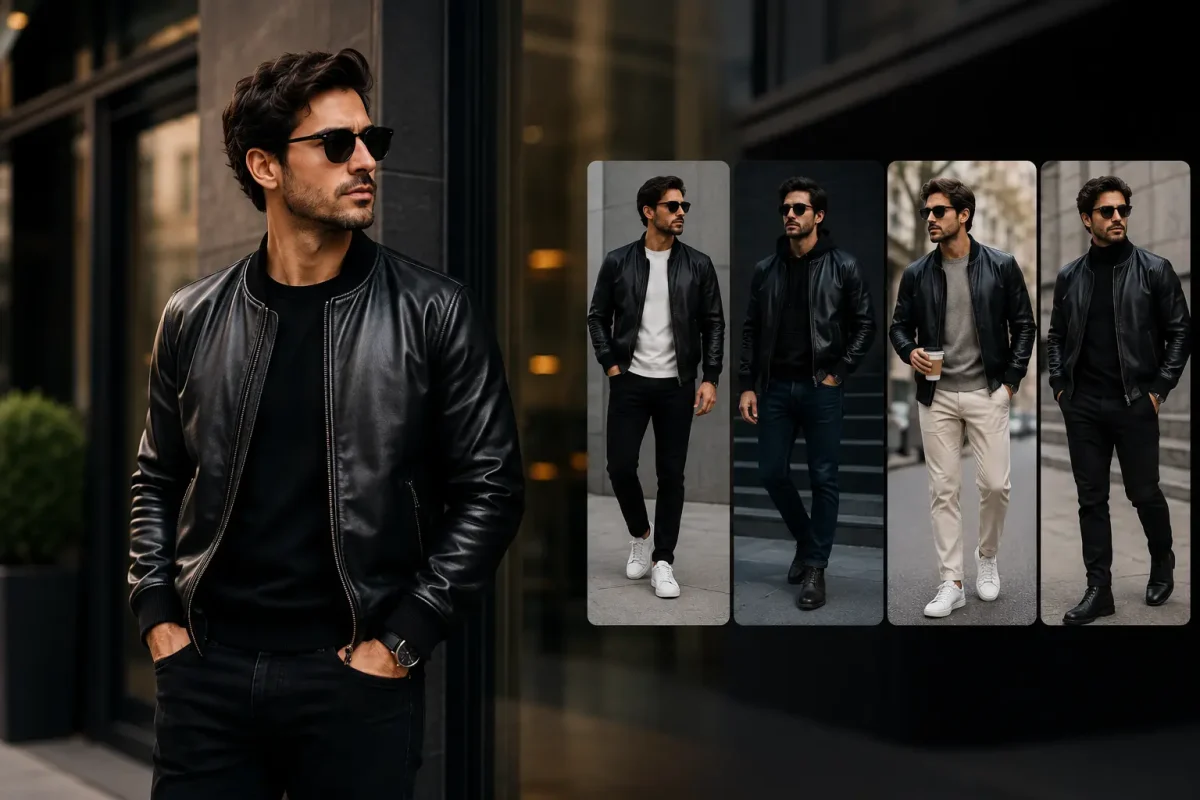
The 2010s brought the bomber jacket back to high fashion in a serious way, with major runway houses reworking the silhouette in technical fabrics, oversized proportions, and elevated leathers, treating a nearly century-old military garment as a blank canvas rather than a retro reference. That runway attention filtered down into mainstream menswear, and by the 2020s the bomber jacket had settled into something rarer for a piece with this much history: a genuine, no-explanation-needed wardrobe basic, worn across age groups, seasons, and dress codes rather than tied to one specific scene, decade, or subculture.
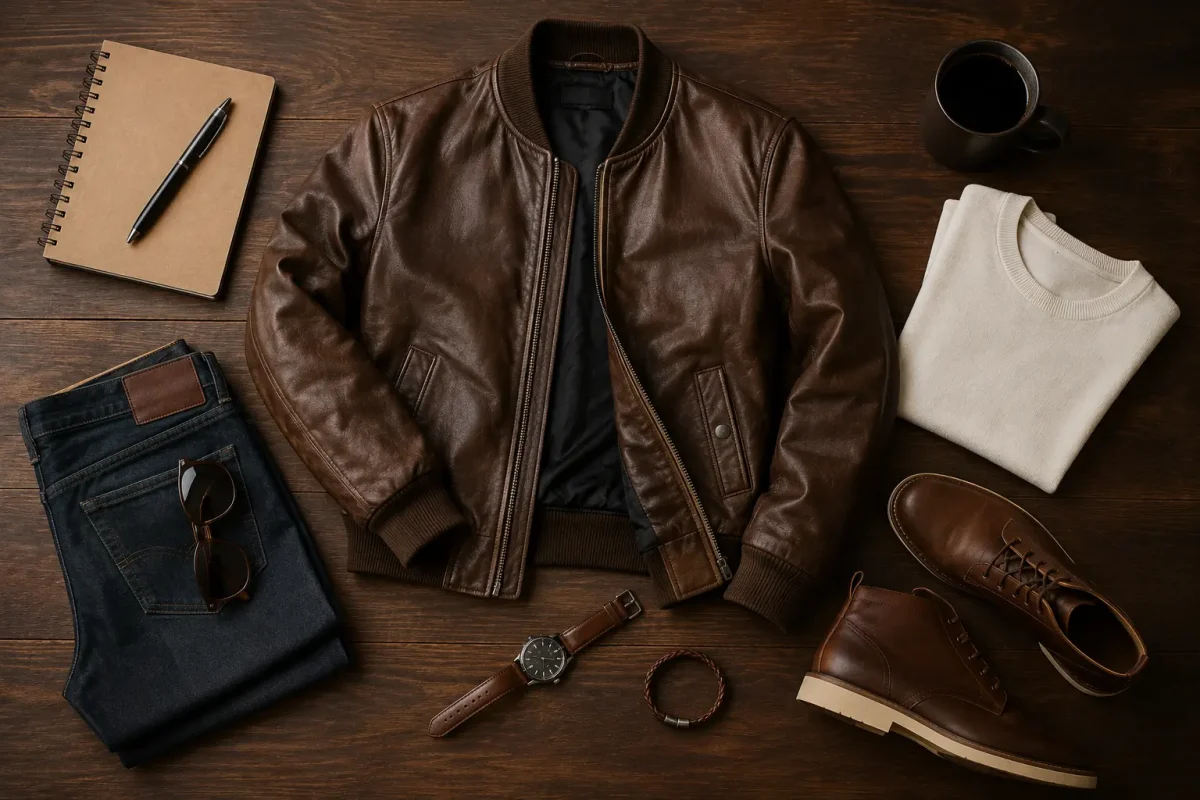
Leather has become the version most associated with that staying power. Where nylon and satin bombers still lean casual and sporty, a men’s leather bomber jacket carries more weight, texture, and a sense of investment, aging into something better rather than simply wearing out, which is exactly the quality that turned a piece of 1917 flight gear into a permanent fixture of modern menswear.
History of the Bomber Jacket: A Quick Timeline by Era
For a fast reference, here’s how the history of the bomber jacket breaks down era by era:
- 1917–1918 (WWI): The US Army Aviation Clothing Board develops early leather flight clothing to protect open-cockpit pilots from extreme cold.
- 1927: The Type A-1 becomes standard-issue flight clothing, the first true standardized version of the jacket.
- 1931: The Type A-2 replaces the A-1, introducing the zip front and durable horsehide leather associated with WWII bomber crews, and giving the jacket its lasting nickname.
- 1938–1947: The Navy’s M-422 evolves into the Type G-1, the fur-collar jacket later worn by Tom Cruise in Top Gun.
- 1940s (WWII): The B-3 and B-15 introduce shearling collars and nylon shells for different altitude and climate demands.
- 1949–1950: The MA-1 debuts for the Korean War with a nylon shell, orange lining, and the now-standard knitted collar.
- 1950s: Hollywood stars including Bogart, Brando, and James Dean move the jacket into civilian fashion.
- 1959–1963: Alpha Industries is founded and begins producing the MA-1 under military contract, later launching it into civilian retail.
- 1960s–70s: Vietnam-era variants add combat detailing, while UK youth subcultures adopt the MA-1 silhouette.
- 1980s: The Nomex CWU-45/P replaces the MA-1 in active service, while Top Gun and Steve McQueen push the bomber into mainstream pop culture.
- 1990s–2000s: Hip-hop and streetwear adopt bold colors and satin finishes, splitting the bomber into casual and premium leather tiers.
- 2010s–Today: Runway reinterpretations and everyday leather versions turn the bomber into a genuine, season-spanning wardrobe staple.
Wear the Legacy of the Bomber Jacket
From the A-2 and G-1 to the iconic MA-1, bomber jackets have evolved for more than a century without losing their unmistakable character. Explore our leather bomber collection and find a modern version of this enduring classic.
Shop Men’s Leather Bomber Jackets
Frequently Asked Questions About Bomber Jacket History
Who invented the bomber jacket?
No single person invented the bomber jacket. It was developed collectively by the US Army’s Aviation Clothing Board starting in 1917, refined into the standardized A-1 in 1927 and the A-2 in 1931, then adapted separately by the Navy as the G-1 and by the Air Force as the MA-1. It’s the product of three different branches of the military solving the same cold-weather flying problem over roughly three decades, not a single inventor’s design.
Why is it called a “bomber” jacket instead of a flight jacket?
Military paperwork used the term flight jacket, but the nickname bomber jacket stuck because of the WWII bomber crews who wore the A-2 most visibly, often personalizing them with painted squadron art and mission tallies. The nickname eventually replaced the official term in everyday and retail use.
What was the original bomber jacket made of?
The earliest WWI-era flight clothing was made from heavy leather, sometimes lined with fur or wool. The standardized A-1 (1927) used chrome-tanned sheepskin, and the A-2 (1931) that replaced it switched to more durable horsehide leather, both worlds away from the water-resistant nylon the MA-1 introduced in 1949 and 1950.
When did bomber jackets become popular outside the military?
Civilian popularity really began in the 1950s, when returning servicemen wore their surplus flight jackets as everyday outerwear and Hollywood stars like Humphrey Bogart, Marlon Brando, and James Dean wore the same silhouette on screen. Alpha Industries formalized that shift by selling MA-1 jackets directly to civilians starting in the 1970s, and the 1980s, driven by films like Top Gun, gave the style its biggest mainstream spike.
Were bomber jackets popular in the 80s?
Yes. Steve McQueen’s sage-green MA-1 in The Hunter (1980) and Tom Cruise’s G-1 in Top Gun (1986) kept the jacket firmly in the mainstream, even as it simultaneously carried more complicated associations within UK youth subculture during the same decade.
What’s the difference between an MA-1 and an A-2 jacket?
The A-2 (1931) is a WWII-era Army Air Corps jacket made of horsehide leather with a fold-down collar and a zip front. The MA-1 (1949–1950) is a later, lighter Air Force design built for the jet age, using a water-resistant nylon shell, a reversible orange lining for rescue visibility, and a knitted collar instead of leather or fur. They’re both bomber jackets, but from different branches, decades, and material generations.
Is a bomber jacket the same thing as a flight jacket?
Yes. “Flight jacket” is the original military term, and “bomber jacket” is the popular nickname that eventually took over in civilian use. Both refer to the same family of short, ribbed-collar, zip-front jackets developed for military pilots.
When were jackets invented in general, not just bombers?
Jackets as a distinct, shorter garment separate from full-length coats date back to at least the 16th and 17th centuries in Europe. The bomber jacket is a much more recent, specific branch of that history, developed for aviation in the 20th century rather than evolving from general tailoring traditions.
Conclusion
From open-cockpit survival gear in 1917, through the standardized A-1, A-2, G-1, and MA-1 of three separate wars, to the Hollywood-approved silhouette of the 1950s, a contested symbol in 1980s subculture, and today’s smart-casual staple, the bomber jacket has changed shape and meaning more times than almost any other garment in menswear. What hasn’t changed is the core idea: a fitted, ribbed-hem jacket that adds structure without bulk, built to move with you rather than against you.
That same logic, fit, material, and craftsmanship over trend-chasing, is what Leather Outfits Store applies across its own leather bomber collection, carrying more than a century of design history forward into pieces built for the way people actually dress today.



2 thoughts on “The Complete Bomber Jacket History: From WWI Cockpits to Modern Streetwear”